


CIP

Cleaning In Place
Modern Cleaning Technology in the Process Industry
In manufacturing industries such as the pharmaceutical, biotechnology, food, and dairy sectors, hygiene and product purity are absolutely critical. Maintaining the highest standards of cleanliness is not merely a matter of product quality, but crucially also of patient safety and food safety.
Traditionally, cleaning production equipment required pumps, pipes, tanks, and valves to be manually disassembled, cleaned by hand, and then reassembled. This process was time-consuming, labor-intensive, and associated with a high risk of human error and contamination.
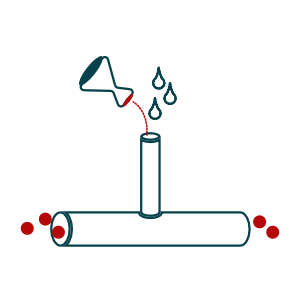
The solution to this challenge is Cleaning In Place (CIP) — an automated method for cleaning and disinfecting process equipment without dismantling it.
What is CIP, and how does it work?
CIP (Cleaning In Place) refers to both equipment and techniques that enable thorough cleaning of the internal surfaces of piping, reactors, mixing tanks, and process machinery.
The process operates by circulating a precisely formulated cleaning solution through the equipment using pumps, while automated valves and control systems regulate fluid flow, pressure, and temperature.
A typical CIP cycle consists of several stages:
- Pre-rinse: Removes loose product residues using water.
- Detergent wash: Recirculation of cleaning agents (e.g., caustic/alkali for organic matter or acid for scale and minerals).
- Intermediate rinse: Flushes out detergent residues.
- Disinfection / Sterilization: Application of chemical disinfectants or hot water/steam (often combined with Sterilization In Place / SIP).
- Final rinse: Rinsing with pure water (often USP- or WFI-grade in pharma) to ensure no chemical traces remain.
Why CIP is indispensable in key sectors
CIP systems are utilized across numerous critical industries where regulatory compliance and GMP (Good Manufacturing Practice) standards are rigorous:
-
The pharmaceutical and biotechnology industry: CIP is critical in the manufacturing of pharmaceuticals, vaccines, therapeutic proteins, and monoclonal antibodies. The system cleans reactors, fermenters, and chromatography columns to prevent cross-contamination and ensure product purity and potency.
-
The food and dairy sector: Here, CIP prevents the proliferation of microorganisms and bacteria in tanks, pipes, and filling lines, protecting consumers from foodborne illnesses and extending product shelf life.
-
The cosmetics industry: Cleaning blenders and storage tanks ensures that cosmetic formulations are not contaminated with bacteria that could compromise product quality.
Design flexibility: Static vs. Mobile CIP systems
Cleaning requirements vary depending on facility footprint and production architecture. Consequently, CIP equipment is typically categorized into two primary types:
-
Static CIP systems: Fixed-installation systems (such as Suncombe's PureCIP® or CIPOne®) integrated directly into the production line. These are ideal for large-scale, dedicated processing plants with continuous cleaning demands.
-
Mobile CIP units: Flexible, portable units (such as MobileCIP® or CIPTrolley™) that can be moved to various process vessels and skids as needed. They deliver maximum versatility in facilities with adaptable production layouts or limited floor space.
Sustainability in modern CIP systems
Because conventional CIP processes can be resource-intensive in terms of water, chemicals, and energy, modern CIP system design places a strong emphasis on sustainability and resource conservation:
-
Water conservation: By reclaiming rinse water, utilizing optimized spray nozzles, and tailoring cycle times, water consumption can be reduced significantly without compromising cleanliness.
-
Chemical selection: Utilizing biodegradable and non-toxic detergents minimizes environmental impact and reduces wastewater load.
-
Energy efficiency: Optimizing operating temperatures, insulating tanks, and employing energy-efficient pumps and heat exchangers lowers overall electrical and thermal consumption.
-
Waste reduction and Life Cycle Assessment (LCA): Through rigorous process design and life cycle assessments, engineering efforts focus on minimizing wastewater volumes and the overall environmental footprint of the wash cycle.
Conclusion
Cleaning In Place (CIP) is more than just an automated wash cycle — it is a cornerstone of modern hygienic and pharmaceutical manufacturing. By eliminating manual equipment disassembly, CIP ensures reproducible cleaning results, regulatory compliance, and reduced production downtime. With an increasing focus on resource efficiency and sustainability, CIP technology continues to advance toward higher-efficiency, environmentally responsible solutions for the future process industry.
FAQ
What is CIP
Definition: Cleaning In Place — automated cleaning and disinfection of process equipment without disassembly.
Typical cycle: Pre-rinse -> Chemical wash (caustic/acid) -> Intermediate rinse -> Disinfection/SIP -> Final rinse.
Key benefits: Minimizes downtime, lowers labor costs, and eliminates the risk of human error.
Key Sectors & Applications
- Pharma & Biotech: Cleaning of reactors and fermenters; prevents cross-contamination and ensures drug purity.
Food & Dairy: Ensures food safety and prevents bacterial growth in tanks, piping, and filling lines.System Types:- Static CIP systems: Fixed installations for continuous, large-scale production.
- Mobile CIP units: Portable skids for flexible manufacturing requirements.
Sustainability & Resource Optimization
- Water conservation: Rinse water recovery and deployment of high-impact spray devices.
- Green chemistry: Selection of biodegradable, non-hazardous detergents.
- Energy efficiency: Optimization of process temperatures alongside energy-efficient pumps and heat exchangers.
- Environmental focus: Wastewater reduction driven by Life Cycle Assessments (LCA).